myABBA
Los Diez Mandamientos
En el monte Sinaí, Dios da a su pueblo un camino para vivir en libertad y amor.
Exodus 19–20
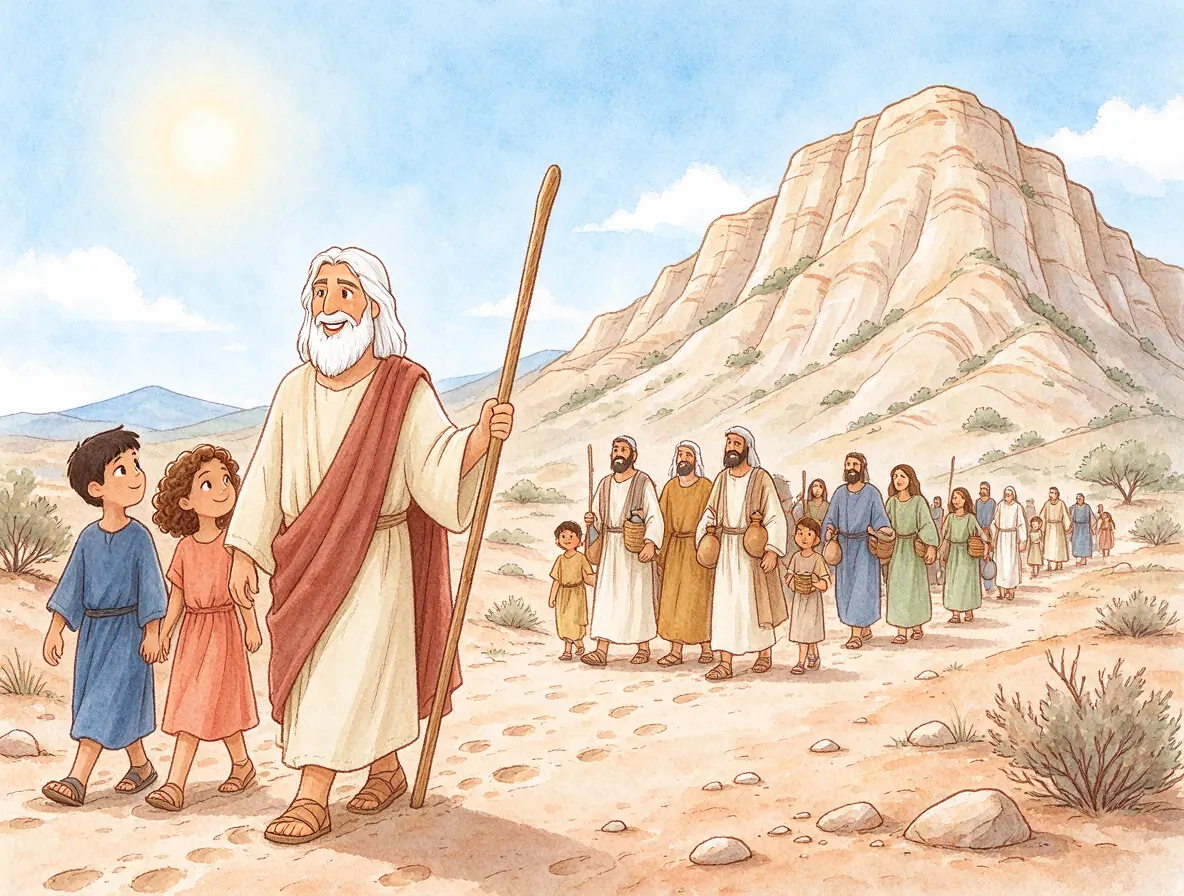
Freed from Egypt, the Hebrews walked through the desert to Mount Sinai. They camped there, and God called Moses up the mountain. The people saw thunder, lightning and a thick cloud: God was near.
Before any rule, God reminded them who he was: "I am the Lord your God, who brought you out of the land of Egypt, out of the house of slavery." The commandments did not come to trap a people — they came to a people who had just been set free.
The words were written on two tablets of stone. The first part speaks of our love for God: he alone is God, his name is holy, there is a day to rest in him. The second speaks of love for our neighbor: honor father and mother, do not kill, do not steal, do not lie, do not covet what belongs to another.
Centuries later, Jesus summed it all up in two sentences: love God with all your heart and love your neighbor as yourself. The commandments draw the shape of that life — a path that protects the freedom God gave.
Reflexión
It is easy to see the commandments as a list of prohibitions. But they begin with a rescue: "I brought you out of slavery." Obedience is not the price of God's love — it is the response to it. Which of these paths of love is hardest for you this week?
Para niños
In the desert: After leaving Egypt, God's people walked through the desert to a very tall mountain.
<a href="/es/historias">Historias</a> · <a href="/kids">myABBA for Kids</a>