myABBA
The Ten Commandments
On Mount Sinai, God gives his people a way to live in freedom and love.
Exodus 19–20
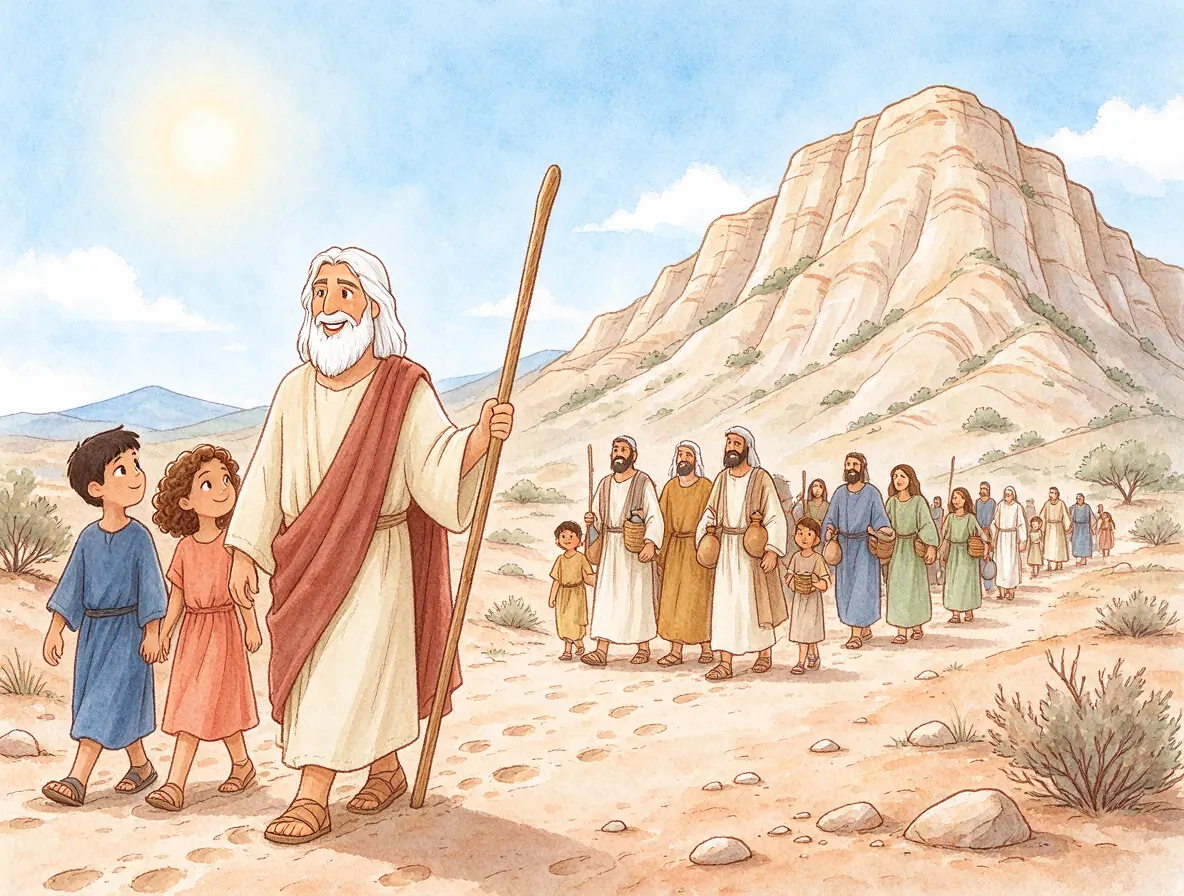
Freed from Egypt, the Hebrews walked through the desert to Mount Sinai. They camped there, and God called Moses up the mountain. The people saw thunder, lightning and a thick cloud: God was near.
Before any rule, God reminded them who he was: "I am the Lord your God, who brought you out of the land of Egypt, out of the house of slavery." The commandments did not come to trap a people — they came to a people who had just been set free.
The words were written on two tablets of stone. The first part speaks of our love for God: he alone is God, his name is holy, there is a day to rest in him. The second speaks of love for our neighbor: honor father and mother, do not kill, do not steal, do not lie, do not covet what belongs to another.
Centuries later, Jesus summed it all up in two sentences: love God with all your heart and love your neighbor as yourself. The commandments draw the shape of that life — a path that protects the freedom God gave.
Reflection
It is easy to see the commandments as a list of prohibitions. But they begin with a rescue: "I brought you out of slavery." Obedience is not the price of God's love — it is the response to it. Which of these paths of love is hardest for you this week?
For kids
In the desert: After leaving Egypt, God's people walked through the desert to a very tall mountain.
Hear more stories in the app (free)
Narrated stories, the verse of the day and the Bible on your phone, for free.
<a href="/en/stories">Stories</a> · <a href="/kids">myABBA for Kids</a>